Krause’s childhood
A Pastor’s Orphan
[George Krause](entity:character-recall-character-george-krause-23f5a2a74b8a) grew up as the son of a Lutheran minister, loved by a father who taught him Scripture, mathematics, duty, and self-command. The warmth of that childhood became a lasting refuge, even as its strict lessons helped form the austere officer he would become.
His father died when [Krause](entity:character-recall-character-krause-23c28f181748) was young, leaving him an orphan with only a small inheritance. A senator’s unusual nomination sent him to the [United States Naval Academy](entity:organization-recall-organization-united-states-na-c1ca2bf955de), changing the direction of his life through an accident of opportunity.
Krause’s youth and early adulthood
Training at Annapolis
At [Annapolis](entity:location-recall-location-annapolis-2e3c812912e0), [Krause](entity:character-recall-character-krause-23c28f181748) acquired discipline and subordination to supplement the moral code he had learned at home. He graduated with the class of 1922, and discovered an unexpected talent for fencing.
The academy’s severe training reinforced rather than softened his uncompromising sense of duty. Years later, his instinctive tactical decisions would resemble the rapid parries and ripostes he had practiced with a blade.
Krause’s early naval career
The Navy Becomes Home
The [United States Navy](entity:organization-recall-organization-united-states-na-f3ced60de010) became [Krause](entity:character-recall-character-krause-23c28f181748)’s home. He spent much of his adult life at sea, principally in destroyers, and built his identity around professional duty rather than family or a settled place.
When service brought him back to the landscapes of his childhood, development and traffic had transformed them. The changing world seemed to sever his remaining connection to home, leaving the ship as the place where he belonged.
When Krause was thirty-five
Marriage to Evelyn
[Krause](entity:character-recall-character-krause-23c28f181748) fell deeply in love with [Evelyn](entity:character-recall-character-evelyn-b030d9453f60), a brilliant young woman whose warmth briefly made [Southern California](entity:location-recall-location-820a2bba2911) feel like home. Their marriage brought him an active happiness unlike anything he had known before.
But Evelyn struggled to understand the Navy’s demands and the meaning Krause attached to duty. Their disagreements exposed how little he could explain the obligations that governed him, even to the person he loved most.
After Krause’s promotion board setbacks
The Promotion Wound
A promotion board marked [Krause](entity:character-recall-character-krause-23c28f181748) “fitted and retained,” keeping him in his grade without promotion. To him, the verdict seemed to reject the years of service around which he had built his life, though he understood that the Navy could not promote every officer.
His marriage deteriorated amid arguments, guilt, and [Evelyn](entity:character-recall-character-evelyn-b030d9453f60)’s eventual relationship with a young lawyer. Krause requested Atlantic service to avoid the places and gossip that recalled her, and the emotional wound remained with him during the convoy mission.
Before dawn on Wednesday
The Convoy’s Burden
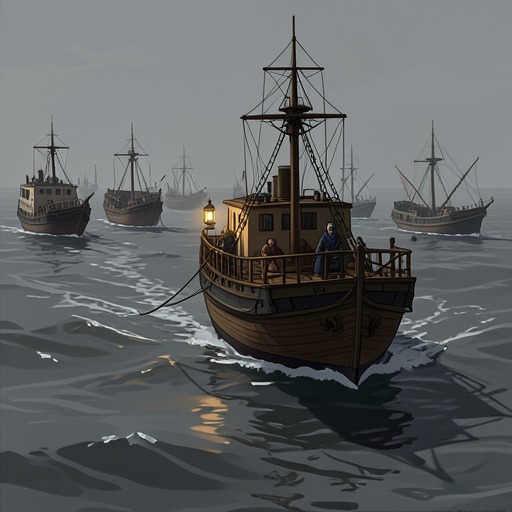
Thirty-seven merchant ships crossed the [North Atlantic](entity:location-recall-location-47148643b546) in close formation, escorted by four fighting ships. Their movement depended on imperfect vessels, difficult weather, and the small variations in judgment and response that could turn a course change into a collision.
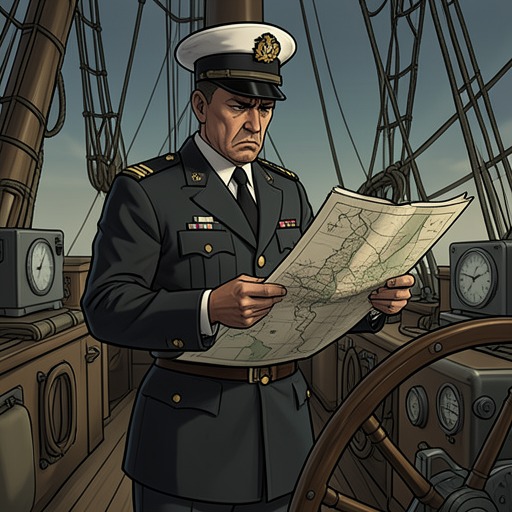
The convoy carried supplies essential to [England](entity:location-recall-location-edbf4fdebc64) and the Allied war effort. Its fate rested on Commander [George Krause](entity:character-recall-character-george-krause-23f5a2a74b8a), a forty-two-year-old American officer commanding [Keeling](entity:object-recall-object-keeling-d36a2d35755c) and the escort, whose human decisions mattered more quickly than any mechanical fault.
Wednesday, shortly after dawn
Krause’s Morning Ritual
After hours on the bridge through the dark and grey dawn, [Krause](entity:character-recall-character-krause-23c28f181748) finally bathed, shaved, and changed. Facing his reflection, he regarded his body as an instrument for duty rather than as a familiar self.
He repeated “[Yesterday, to-day, and forever](entity:expression-recall-expression-yesterday-to-day-a-5bc520260301),” a line that marked the passage from one stage of his mortal life toward eternity. His prayerful private moment ended when the bridge summoned him urgently.
Wednesday morning, about 0800
James Reports Contact
Lieutenant [Carling](entity:character-recall-character-carling-f89519a2ac70) called [Krause](entity:character-recall-character-krause-23c28f181748) to the bridge: [James](entity:object-recall-object-james-edd05b713b77) had a distant sonar contact and wanted permission to attack. Krause rapidly weighed the uncertain possibility of a submarine against the danger of weakening the screen and spending scarce fuel.
He also considered the risk that an undisturbed U-boat might report the convoy and guide a larger attack toward it. After seconds of calculation, he authorized James to pursue the contact.
Wednesday morning, immediately after the first authorization
Viktor Joins James
[Viktor](entity:object-recall-object-viktor-bde355fbb2a6) requested permission to assist [James](entity:object-recall-object-james-edd05b713b77). [Krause](entity:character-recall-character-krause-23c28f181748) approved, knowing that the Polish destroyer and British corvette had worked together effectively before and that their partnership made a successful attack more likely.
The two escorts turned away from the convoy, leaving Krause with [Keeling](entity:object-recall-object-keeling-d36a2d35755c) and [Dodge](entity:object-recall-object-dodge-f51cfbbfb8a7) to cover the remaining ships. The decision traded a thinner screen for a better chance of destroying a submarine and preventing it from summoning others.
Wednesday morning, after Viktor and James detach
The Remaining Screen
[Krause](entity:character-recall-character-krause-23c28f181748) ordered [Dodge](entity:object-recall-object-dodge-f51cfbbfb8a7) to a station ahead of the convoy’s starboard column, then directed [Keeling](entity:object-recall-object-keeling-d36a2d35755c) across the formation to take a position ahead of its port column. The maneuver left only two vessels to guard the broad, vulnerable convoy.
He noticed mistakes and weaknesses among his crew as the orders passed through the ship: an unreliable helmsman, a new engine-room hand, and [Carling](entity:character-recall-character-carling-f89519a2ac70)’s readiness to sound the general alarm. Krause filed each observation away, treating small incidents as evidence relevant to command and trust.
Wednesday morning, during the first contact pursuit
No General Quarters Yet
[Carling](entity:character-recall-character-carling-f89519a2ac70) stood ready to sound [General Quarters](entity:rule-recall-rule-general-quarters-1bad98419715), but [Krause](entity:character-recall-character-krause-23c28f181748) refused. [James](entity:object-recall-object-james-edd05b713b77) was pursuing a contact at a distance, not yet a sufficient reason to exhaust the entire crew’s battle reserve or halt the ship’s routine work.
[Keeling](entity:object-recall-object-keeling-d36a2d35755c) was already at [Condition Two](entity:rule-recall-rule-condition-two-6360cbfd365d), a demanding readiness level that could be sustained longer than battle stations. Krause believed readiness had to be managed as carefully as fuel and ammunition, rather than summoned at every uncertain report.
Wednesday morning, during the convoy’s course change
A Convoy in Disorder
[Krause](entity:character-recall-character-krause-23c28f181748) inspected the convoy and saw stragglers recovering from a nighttime engine failure, smoke rising from merchant ships, and ships beginning to fall out of line. He watched the Commodore’s signal order the next course change.
The convoy’s ponderous turn produced the confusion he expected: columns buckled, ships wandered, and a few risked collisions. An outlying vessel could become an easy target for a submarine, so Krause kept the disorder and its vulnerable edges under close observation.
Wednesday morning, immediately after the course change
Dodge Herds the Stragglers
The convoy Commodore asked [Krause](entity:character-recall-character-krause-23c28f181748) to send a corvette to help restore formation. Krause agreed and ordered [Dodge](entity:object-recall-object-dodge-f51cfbbfb8a7) to leave her station, obey the Commodore’s directions, herd the stragglers back into line, and keep searching with sonar on the dangerous flank.
[Keeling](entity:object-recall-object-keeling-d36a2d35755c) took over a broad patrol across the convoy’s front. Krause had stretched his small escort force still further, but he was trying to protect the vulnerable formation while allowing the Commodore to regain control of it.
Wednesday morning, after the convoy begins to reform
The Huff-Duff Warning
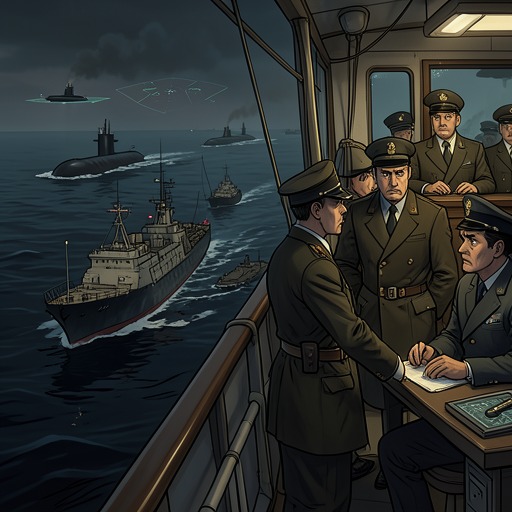
The Commodore signaled that [Huff-Duff](entity:object-recall-object-huff-duff-779bc598695c) had detected a foreign transmission bearing nearly into the convoy’s path, probably from a U-boat fifteen to twenty miles away. Unlike [James](entity:object-recall-object-james-edd05b713b77)’s uncertain sonar contact, the direction-finding report offered a more definite warning.
[Krause](entity:character-recall-character-krause-23c28f181748) replied that he would run the signal down. He ordered flank speed, took the conn, and summoned [General Quarters](entity:rule-recall-rule-general-quarters-1bad98419715), accepting the physical and operational cost because the enemy’s location now appeared urgent enough to justify it.
Wednesday morning, immediately after the Huff-Duff report
Keeling Charges Ahead
[Krause](entity:character-recall-character-krause-23c28f181748) ordered [Keeling](entity:object-recall-object-keeling-d36a2d35755c) toward the reported bearing at flank speed and sent [Viktor](entity:object-recall-object-viktor-bde355fbb2a6) to cover the convoy’s front. [James](entity:object-recall-object-james-edd05b713b77) and [Dodge](entity:object-recall-object-dodge-f51cfbbfb8a7) were assigned the flanks, while Keeling raced into the murk ahead of the convoy.
He told the ship’s company that they were running down a U-boat and required every man to be ready. [Radar](entity:object-recall-object-25409b05be2b) soon showed a small, low target ahead, and the possibility of an encounter became immediate.
Wednesday morning, minutes after Keeling’s radar contact
A Target Dives
As the radar range closed, [Krause](entity:character-recall-character-krause-23c28f181748) held his fire. The U-boat was almost within the five-inch guns’ reach, but [Keeling](entity:object-recall-object-keeling-d36a2d35755c)’s old radar could be inaccurate, and a missed salvo might give the enemy time to dive.
The target vanished from the screen before Krause fired. He accepted the possibility that the submarine had submerged, and ordered Keeling to maintain speed and intercept its likely underwater course rather than waste the opportunity in regret.
Wednesday morning, after the target disappears
Ellis Finds the Echo
[Krause](entity:character-recall-character-krause-23c28f181748) slowed [Keeling](entity:object-recall-object-keeling-d36a2d35755c) enough to use sonar and ordered the search to begin. The sonar operator, [Tom Ellis](entity:character-recall-character-tom-ellis-3726c0154af5), had trained at Key West but had never found an enemy submarine at sea; Krause knew that a battle might depend on his skill and composure.
The first sonar contact appeared close to the predicted position. Its uncertain range and sudden disappearance left Krause to decide whether it had been a real submarine, a temperature layer, or a German bubble decoy.
Wednesday morning, during Keeling’s first sonar chase
The Underwater Circling
Contacts reappeared on changing bearings as the submerged U-boat and [Keeling](entity:object-recall-object-keeling-d36a2d35755c) maneuvered around one another. [Krause](entity:character-recall-character-krause-23c28f181748) tracked range and bearing, trying to exploit the destroyer’s greater speed while the submarine used its tighter turning circle.
The contact repeatedly shifted direction, making each report a delayed and imperfect account of the enemy’s movement. Krause had to infer what the submarine had done before new sonar information and helm orders could catch up.
Wednesday morning, as the first underwater pursuit reaches equilibrium
Krause Reverses the Turn
When the two vessels settled into a repeated circle, [Krause](entity:character-recall-character-krause-23c28f181748) ordered [Keeling](entity:object-recall-object-keeling-d36a2d35755c) to reverse direction before the U-boat did. The move was risky: if the enemy continued on her course, Keeling could lose sonar contact, but if the U-boat turned as expected she might run straight into the destroyer’s path.
The prediction succeeded. Keeling closed to a stronger position behind the submarine, and the sonar report showed the target almost dead ahead with Doppler indicating that the destroyer was gaining on it.
Wednesday morning, moments after Keeling closes on the U-boat
The First Depth-Charge Attack
As the target drew dangerously close, [Krause](entity:character-recall-character-krause-23c28f181748) ordered a medium pattern of depth charges. The U-boat appeared to turn toward [Keeling](entity:object-recall-object-keeling-d36a2d35755c), forcing the destroyer to attack with only an imperfect estimate of where the submarine lay beneath the waves.
Krause saw the charges erupt behind the ship and immediately recognized that he had lost seconds by watching from the bridge wing. Sonar was temporarily deafened, and the attack’s success remained unknown as Keeling turned back toward the firing point.
Wednesday, after Keeling’s first depth-charge pattern
The Wolfpack Message
A delayed [Admiralty](entity:organization-recall-organization-admiralty-f42cc9488820) message reported a concentration of enemy submarines at coordinates almost exactly where [Keeling](entity:object-recall-object-keeling-d36a2d35755c) was operating. It recommended a radical change of course to the south, but the convoy was too close and too large to turn safely on short notice.
[Krause](entity:character-recall-character-krause-23c28f181748) decided to continue through the danger rather than send an order that would create confusion and expose the ships during another disorderly maneuver. He also kept the warning from his subordinates because it would not change what they could do and because the enemy might be listening.
Wednesday, later in the morning
A Periscope Sighted
After searching without a steady contact, [Keeling](entity:object-recall-object-keeling-d36a2d35755c) picked up a distant sonar indication. A lookout then shouted that he had seen a periscope about a mile ahead, briefly showing through the rough sea before disappearing.
[Krause](entity:character-recall-character-krause-23c28f181748) judged the sighting credible and believed the submarine was trying to orient herself near the convoy after the earlier depth-charge attack. He summoned [Viktor](entity:object-recall-object-viktor-bde355fbb2a6) to help pursue the new contact, even though doing so further weakened the convoy’s screen.
Wednesday, late morning
Viktor Joins the Hunt
[Krause](entity:character-recall-character-krause-23c28f181748) told [Viktor](entity:object-recall-object-viktor-bde355fbb2a6) to leave her screening position and cross to the contact. With the submarine’s position uncertain, he assigned [James](entity:object-recall-object-james-edd05b713b77) and [Dodge](entity:object-recall-object-dodge-f51cfbbfb8a7) to divide the convoy’s flanks while [Keeling](entity:object-recall-object-keeling-d36a2d35755c) and Viktor closed on the threat.
The sonar contact faded and returned as the two destroyers converged. Krause and the Polish captain exchanged bearings and movements over the ship-to-ship radio, relying on each other to make an attack possible without colliding.
Wednesday, late morning, during the second submarine pursuit
Viktor’s First Attack
[Viktor](entity:object-recall-object-viktor-bde355fbb2a6) closed on a contact crossing [Keeling](entity:object-recall-object-keeling-d36a2d35755c)’s path and asked permission to attack. [Krause](entity:character-recall-character-krause-23c28f181748) granted it, then shifted Keeling’s course to avoid collision and preserve a position from which he could follow up.
Viktor dropped depth charges, but the explosion obscured the sonar picture. Krause ordered Keeling to search elsewhere while keeping both ships in a position to resume the attack if the submarine survived.
Wednesday, late morning, after Viktor’s attack
The U-Boat Is Destroyed
[Keeling](entity:object-recall-object-keeling-d36a2d35755c) regained a close contact and [Krause](entity:character-recall-character-krause-23c28f181748) ordered his own attack as the U-boat moved between the two destroyers. [Viktor](entity:object-recall-object-viktor-bde355fbb2a6)’s captain reported hearing the submarine crunch under the pressure of the explosions, convincing Krause that the enemy had been destroyed.
Krause felt the weight of the victory as well as its professional significance: roughly fifty men had died. He offered the Polish captain congratulations, but refused to let Viktor delay the convoy’s defense merely to gather proof of the sinking.
Wednesday, around midday
The Escort Returns to Station
[Krause](entity:character-recall-character-krause-23c28f181748) told the crew that [Viktor](entity:object-recall-object-viktor-bde355fbb2a6) had heard the U-boat break up, and praised the ship’s collective work. He singled out Ellis for his performance, then ordered the escorts to resume their normal daylight stations.
A small oil patch appeared behind [Keeling](entity:object-recall-object-keeling-d36a2d35755c), giving additional support to the claim that the submarine had been destroyed. Krause judged that it was not worth keeping a valuable destroyer in the area for an hour to seek stronger proof, and ordered the ship to secure from [General Quarters](entity:rule-recall-rule-general-quarters-1bad98419715).
Wednesday, early afternoon
A New Officer Takes the Deck
As [Keeling](entity:object-recall-object-keeling-d36a2d35755c) moved back toward her screening station, [Krause](entity:character-recall-character-krause-23c28f181748) dealt with fuel reports, routine duties, and a minor disciplinary case that had already been delayed by the battle. He was exhausted, cold, and still had not had time to dress properly for the weather.
He rebuked Nystrom for asking him to decide a routine matter that belonged to the officer of the deck. The incident reinforced Krause’s concern about officers who hesitated to accept responsibility, even as the convoy appeared temporarily back in order.
Wednesday, early afternoon
Rockets Astern
A lookout reported two white rockets far astern, the convoy’s warning that a ship had been torpedoed. The Commodore ordered a general alarm, and [Krause](entity:character-recall-character-krause-23c28f181748) saw that a merchant ship had fallen out of position while another swerved to avoid her.
Because [Dodge](entity:object-recall-object-dodge-f51cfbbfb8a7) was needed to protect the van and the corvette could not spare the speed to return quickly, Krause took [Keeling](entity:object-recall-object-keeling-d36a2d35755c) back toward the rear. He told the other escorts to close up and protect the front as he set off to investigate.
Wednesday, early afternoon, during Keeling’s return to the convoy’s rear
The Sinking Merchant Ship
[Keeling](entity:object-recall-object-keeling-d36a2d35755c) passed the damaged merchant ships and saw a vessel nearly overturned, with survivors already climbing aboard [Cadena](entity:object-recall-object-cadena-3308aad61b9f). The designated rescue ship had launched boats and was taking people from the water.
[Krause](entity:character-recall-character-krause-23c28f181748) ordered Keeling to resume sonar search and watched the badly damaged ship roll, rise, and finally sink. Cadena reported that the rescue was complete, but the ship’s exact human losses remained unknown.
Wednesday, shortly after the merchant ship sinks
A Torpedo Misses Keeling
A lookout shouted that a torpedo was to port as [Keeling](entity:object-recall-object-keeling-d36a2d35755c) maneuvered near the wreck and [Cadena](entity:object-recall-object-cadena-3308aad61b9f). [Krause](entity:character-recall-character-krause-23c28f181748) ordered a turn away from the likely track, then used the fleeting wake to reason that the submarine might be approaching Cadena from the flank.
He placed Keeling between the enemy and the rescue ship, while trying to make his own movements unpredictable. The torpedo appeared to pass harmlessly ahead, but the encounter confirmed that the threat had not ended with the earlier victory.
Wednesday, afternoon, after the torpedo attack
Keeling Saves Four Men
[Krause](entity:character-recall-character-krause-23c28f181748) heard a survivor calling from the dark water. He weighed the risk to [Keeling](entity:object-recall-object-keeling-d36a2d35755c) and to the convoy against the lives in the water, then ordered a turn back and directed the crew to prepare lines and rescue stations.
Keeling slowed and maneuvered to give the survivors a lee. The crew brought four men aboard, two badly burned, while [Cadena](entity:object-recall-object-cadena-3308aad61b9f) continued her own rescue work and then received Krause’s order to rejoin the convoy.
Wednesday afternoon, as daylight fades
Radar Shows Submarines Ahead
While [Keeling](entity:object-recall-object-keeling-d36a2d35755c) patrolled back toward the convoy, [James](entity:object-recall-object-james-edd05b713b77) reported two radar targets ahead; [Dodge](entity:object-recall-object-dodge-f51cfbbfb8a7) and [Viktor](entity:object-recall-object-viktor-bde355fbb2a6) soon reported additional pips. [Krause](entity:character-recall-character-krause-23c28f181748) understood that several submarines were gathering in front of the formation, while another might be lurking behind it.
He ordered his escorts to hold their stations and fire when targets came within range. With the screen already thin, he could not send every ship forward without leaving the convoy exposed from other directions.
Wednesday afternoon, as darkness approaches
Ice Closes the Bridge
Freezing spray coated [Keeling](entity:object-recall-object-keeling-d36a2d35755c)’s bridge and jammed the spinning glass discs that kept its windows clear. [Krause](entity:character-recall-character-krause-23c28f181748) ordered warm salt water and men with swabs, while Cole attended to frozen depth-charge equipment with steam hoses.
The ship’s combat systems and weapons depended on practical maintenance as much as on tactical judgment. Krause remained exposed to the wind on the bridge, still without the clothing he needed, as the radar contacts ahead continued to move.
Wednesday evening
The U-Boat Comes Up
A radar pip appeared well abaft [Keeling](entity:object-recall-object-keeling-d36a2d35755c)’s beam, and [Krause](entity:character-recall-character-krause-23c28f181748) judged that it was the submarine that had been pursuing [Cadena](entity:object-recall-object-cadena-3308aad61b9f). He turned to intercept, ordered the guns to prepare for radar-directed fire, and tried to lead the target rather than chase its present position.
As the range closed, the U-boat altered course toward Cadena. Krause withheld fire until the enemy was visible, hoping that direct observation would give his gunners a better chance than the faulty radar alone.
Wednesday evening, shortly before full darkness
A Gun Attack in the Murk
The U-boat appeared against the dim sea and [Keeling](entity:object-recall-object-keeling-d36a2d35755c) opened fire. [Krause](entity:character-recall-character-krause-23c28f181748) saw the shells splash around the target, but could not confirm a hit before the submarine disappeared beneath the surface.
He turned Keeling back toward the other escorts rather than begin a long, unlikely sonar search far astern of the convoy. The decision left the enemy temporarily delayed and returned Keeling to the larger battle developing ahead.
Wednesday evening, after darkness falls
Night Attack Begins
As [Keeling](entity:object-recall-object-keeling-d36a2d35755c) hurried toward the convoy’s front, [James](entity:object-recall-object-james-edd05b713b77) and [Dodge](entity:object-recall-object-dodge-f51cfbbfb8a7) reported submarines ahead and firing began. A star shell illuminated a surfaced U-boat dashing toward the merchant ships, and [Krause](entity:character-recall-character-krause-23c28f181748) steered Keeling across the convoy’s bows to intercept it.
The German submarine crossed through the formation while Keeling fired. One merchant ship loomed unexpectedly across the destroyer’s path, and Krause had to make a hard turn to avoid a collision at speed.
Wednesday night, during the first attack inside the convoy
The Convoy Catches Fire
[Keeling](entity:object-recall-object-keeling-d36a2d35755c) narrowly cleared the merchant ship, but the U-boat reached the next lane and torpedoed another vessel. Machine-gun fire from a confused merchant ship raked Keeling’s bridge, shattering its windows and making the destroyer’s first battle damage come from friendly fire.
A blaze and a tremendous explosion followed among the ships. [Krause](entity:character-recall-character-krause-23c28f181748) used the burning wreck as a reference point, ordered sonar and depth-charge attacks in the likely area, and faced the possibility that survivors were scattered nearby.
Wednesday night, after the ship explodes
Rescue in the Dark
A survivor’s cry reached [Keeling](entity:object-recall-object-keeling-d36a2d35755c) from the water. [Krause](entity:character-recall-character-krause-23c28f181748) considered leaving the man to protect the escort and convoy, but decided the rescue could be attempted without an unacceptable risk.
The crew brought four men aboard from a life raft. Krause then directed [Cadena](entity:object-recall-object-cadena-3308aad61b9f) to continue after the convoy and reported the rescue, accepting a brief detour in the middle of the submarine battle.
Wednesday night, after Keeling rejoins the rear of the convoy
The Decoy Hunt
A radar pip appeared astern, and [Krause](entity:character-recall-character-krause-23c28f181748) turned to pursue a surfaced submarine attempting to catch the convoy. He approached cautiously, withholding gunfire and briefly considering whether a different course and reduced speed could let [Keeling](entity:object-recall-object-keeling-d36a2d35755c) close without being detected.
Sonar contacts appeared to confirm the chase, but Krause eventually recognized that the submarine had released a [Pillenwerfer](entity:object-recall-object-pillenwerfer-f14a448db96e). Keeling had been pursuing bubbles while the real enemy escaped, and the destroyer had to turn back toward the convoy.
Wednesday night, during the First Watch
The Long Night Deepens
As the ship’s watch changed, [Krause](entity:character-recall-character-krause-23c28f181748) explained the uncertain submarine situation to [Carling](entity:character-recall-character-carling-f89519a2ac70) and tried to preserve rest for the men. In a brief lull, memories of [Evelyn](entity:character-recall-character-evelyn-b030d9453f60) and their broken marriage returned, intensified by the fatigue and reaction after hours of combat.
An urgent contact report ended the private sorrow at once. The sudden change showed how completely battle could displace every other concern, even when grief had not been resolved.
Wednesday night, during the Middle Watch
The Night Hunt Resumes
A new contact drew [Keeling](entity:object-recall-object-keeling-d36a2d35755c), [Viktor](entity:object-recall-object-viktor-bde355fbb2a6), [James](entity:object-recall-object-james-edd05b713b77), and [Dodge](entity:object-recall-object-dodge-f51cfbbfb8a7) into another scattered fight around the convoy. [Krause](entity:character-recall-character-krause-23c28f181748) exchanged bearings and headings with the other ships while trying to coordinate their attacks in darkness without collision or interference between their sonar systems.
The submarines turned, doubled back, and used bubble decoys to break contact. The destroyers hunted through the black sea, taking turns closing on faint indications while the convoy continued east under the threat of attack.
Thursday, during the Middle Watch
Torpedoes Miss Viktor
A U-boat fired torpedoes during the close pursuit. [Krause](entity:character-recall-character-krause-23c28f181748) and the sonar team heard the sound fading away, and [Viktor](entity:object-recall-object-viktor-bde355fbb2a6) reported that the weapons had missed her.
The escape brought a moment of relief, but the chase continued. Krause kept [Keeling](entity:object-recall-object-keeling-d36a2d35755c) and Viktor maneuvering around the enemy, trying to prevent it from breaking through to the convoy while [James](entity:object-recall-object-james-edd05b713b77) and [Dodge](entity:object-recall-object-dodge-f51cfbbfb8a7) fought on the flanks.
Thursday before dawn
Ships Burn at Dawn
As dawn crept across the sea, [Krause](entity:character-recall-character-krause-23c28f181748) learned that another submarine was attacking merchant ships while his own ships remained engaged with a different enemy. He faced the painful choice of abandoning a live pursuit to search for the attacker, or continuing to contain the submarine already threatening his force.
He stayed with the current hunt, judging that he could not reliably find the other U-boat and that abandoning the present contact could make the existing danger worse. The decision left merchant sailors exposed to further losses while Krause continued the work he believed most likely to protect the convoy overall.
Thursday morning, after daybreak
The Hunt Continues
[Krause](entity:character-recall-character-krause-23c28f181748) ordered [Keeling](entity:object-recall-object-keeling-d36a2d35755c) and [Viktor](entity:object-recall-object-viktor-bde355fbb2a6) to continue pressing their elusive target away from the convoy’s course. The U-boat repeatedly changed direction, and sonar contacts became uncertain as the destroyers circled and attacked.
Krause imagined the stronger escort force that would be needed to protect a convoy against a determined wolfpack, including additional ships and air cover. Since none was yet at hand, he continued to fight with the limited force and weapons available.
Thursday morning, after many hours of action
Depth-Charges Run Low
Fippler reported that [Keeling](entity:object-recall-object-keeling-d36a2d35755c) had used thirty-four depth charges, with only six left after the next pattern. [Krause](entity:character-recall-character-krause-23c28f181748) recognized that the destroyer’s offensive strength was nearly exhausted, even though the submarine hunt continued.
He ordered future attacks to use single charges rather than full patterns. The smaller attacks offered much poorer odds of a kill, but they could still force an enemy submarine to remain submerged and disrupt its approach to the convoy.
Thursday late morning
A New Periscope Sighting
A lookout spotted a periscope several miles away, and [Krause](entity:character-recall-character-krause-23c28f181748) quickly set an intercepting course. He informed [Dodge](entity:object-recall-object-dodge-f51cfbbfb8a7) that the submarine appeared to be heading toward the convoy and warned that he, too, was nearly out of depth charges.
The new target appeared less cautious than the submarine that had evaded [Keeling](entity:object-recall-object-keeling-d36a2d35755c) and [Viktor](entity:object-recall-object-viktor-bde355fbb2a6) overnight. Krause hoped to keep it submerged and away from the convoy, even if there was too little ammunition for a decisive attack.
Thursday late morning, during the new pursuit
Dodge Joins the Circle
Sonar and a second periscope report showed the submarine crossing [Keeling](entity:object-recall-object-keeling-d36a2d35755c)’s path. [Krause](entity:character-recall-character-krause-23c28f181748) chose single depth charges, preserving the remaining ammunition in case the encounter lasted longer or another submarine appeared.
[Dodge](entity:object-recall-object-dodge-f51cfbbfb8a7) closed in from the side as the submarine circled away from Keeling. Krause altered course to make room for the corvette to attack, turning the pursuit into a dangerous three-ship contest around the submerged enemy.
Thursday late morning, as Dodge attacks
Torpedoes Target Keeling
The submarine fired torpedoes, and [Krause](entity:character-recall-character-krause-23c28f181748) judged that [Keeling](entity:object-recall-object-keeling-d36a2d35755c) was the likely target. He turned to run nearly parallel to their tracks and ordered flank speed, hoping to increase the distance from the firing point and make the destroyer harder to hit.
A torpedo passed close along Keeling’s side and another missed more widely. Krause returned to the hunt as soon as the immediate danger passed, aware that every maneuver had to protect his ship without giving the enemy a clear opportunity to strike the convoy.
Thursday late morning, after the torpedo attack
The Submarine Breaks Surface
[Keeling](entity:object-recall-object-keeling-d36a2d35755c) and [Dodge](entity:object-recall-object-dodge-f51cfbbfb8a7) continued to maneuver around the submarine, but their sonar and single depth charges produced no clear result. A lookout then spotted the U-boat astern, briefly exposed above the water before it disappeared beneath the surface again.
Soon the submarine broke surface close alongside Keeling, apparently unable to control its diving planes. The destroyer’s guns could barely bear on it at such close range, while Dodge rushed in and narrowly avoided colliding with Keeling.
Thursday late morning, moments after the submarine surfaces
Dodge Fights at Close Range
The U-boat surfaced beside [Dodge](entity:object-recall-object-dodge-f51cfbbfb8a7) and the ships circled each other at close range. Its guns could bear on the corvette more easily than Dodge’s gun could depress toward the submarine, and one German shell struck the little ship.
[Krause](entity:character-recall-character-krause-23c28f181748) waited outside the immediate turning fight for an opportunity to intervene. When Dodge abruptly changed direction and the submarine separated from her, [Keeling](entity:object-recall-object-keeling-d36a2d35755c)’s five-inch guns opened fire at close range.
Thursday late morning, during the surface fight
Keeling Destroys the U-Boat
[Keeling](entity:object-recall-object-keeling-d36a2d35755c)’s guns struck the submarine repeatedly as it tried to turn back toward [Dodge](entity:object-recall-object-dodge-f51cfbbfb8a7). A violent shock passed through the destroyer, and the U-boat vanished amid splashing water, bubbles, and wreckage.
[Krause](entity:character-recall-character-krause-23c28f181748) immediately shifted from the attack to damage control, seeing fire and twisted metal where Keeling’s port-side gun tub had been. The victory had cost the ship and its crew, and there was no time to savor it before the danger of a spreading fire threatened the torpedoes aboard.
Thursday late morning, immediately after the submarine is destroyed
Fire Aboard Keeling
Flames spread near gasoline drums and [Keeling](entity:object-recall-object-keeling-d36a2d35755c)’s torpedo mount. [Krause](entity:character-recall-character-krause-23c28f181748) stopped the crew from attacking the gasoline fire with ordinary hoses and ordered foam, then directed the torpedoes to be jettisoned safely rather than risk their exploding aboard ship.
A veteran sailor carried out the difficult instructions, launching the torpedoes inertly into the sea as the fire reached toward them. The flames were brought under control, but the encounter had left Keeling damaged and its combat readiness uncertain.
Thursday around midday
Casualties and a Second Victory
[Dodge](entity:object-recall-object-dodge-f51cfbbfb8a7) reported that seven of her men were dead and others wounded, while [Keeling](entity:object-recall-object-keeling-d36a2d35755c)’s own casualties and damage became clearer. [Krause](entity:character-recall-character-krause-23c28f181748) learned that Dodge had collected a U-boat survivor and evidence, confirming the submarine’s destruction.
Krause praised the work of the allied ships but could not spare even the damaged Dodge from convoy duty. He told his crew that the submarine had been destroyed and that some shipmates had been lost, then returned to the responsibilities of keeping the escort moving.
Thursday afternoon
The Dead Are Buried
Cole and the medical officer urged [Krause](entity:character-recall-character-krause-23c28f181748) to bury the dead while there was still daylight, since the ship had no room to keep the bodies and another attack could come at any time. Krause recognized that his attention had been so occupied by combat that he had not yet addressed the funerals.
He led the burial service on the main deck. The dead were committed to the sea with flags and rifle volleys while the ship’s sonar continued its steady search, and Krause returned immediately to the bridge to resume command.
Thursday evening
Kong Gustav Is Torpedoed
Two white rockets appeared astern, signaling another torpedoing. [Krause](entity:character-recall-character-krause-23c28f181748) could not reach [Viktor](entity:object-recall-object-viktor-bde355fbb2a6) on the radio, and the Commodore’s signal soon reported that Viktor had been hit.
Krause turned [Keeling](entity:object-recall-object-keeling-d36a2d35755c) back through the disordered convoy at flank speed. He had to navigate between ships in darkness while grieving the danger to the Polish destroyer and knowing that the reported attack had also sunk another merchant ship, Kong Gustav.
Thursday evening, after crossing the convoy
Keeling Reaches Viktor
[Keeling](entity:object-recall-object-keeling-d36a2d35755c) reached [Viktor](entity:object-recall-object-viktor-bde355fbb2a6) and learned that the destroyer had been struck in the engine room. Her power was gone, her compartments were flooding, and [Cadena](entity:object-recall-object-cadena-3308aad61b9f) was standing by to take her in tow.
The crew had rigged a jury radio circuit and transferred many ratings to Cadena, but thirty men had died in the engine-room. [Krause](entity:character-recall-character-krause-23c28f181748) ordered Keeling to circle the damaged ships and provide a sonar and radar screen while the tow was arranged.
Thursday night
Viktor Is Taken Under Tow
[Cadena](entity:object-recall-object-cadena-3308aad61b9f) managed to tow [Viktor](entity:object-recall-object-viktor-bde355fbb2a6) at only a few knots. The damaged destroyer was listing and sinking lower, while her crew shored up bulkheads, fought leaks, and tried to steer with improvised equipment.
[Krause](entity:character-recall-character-krause-23c28f181748) kept [Keeling](entity:object-recall-object-keeling-d36a2d35755c) circling the pair, aware that the disabled ship and rescue vessel were valuable targets. He considered whether to break radio silence for help but feared that an enemy intercept might reveal the convoy’s desperate condition and invite a concentrated attack.
Thursday night, while Keeling screens Viktor
The Distress Message Deferred
[Krause](entity:character-recall-character-krause-23c28f181748) concluded that assistance would eventually be necessary, but delayed sending a message until the early morning. A radio transmission might tell the German command that the convoy was weak; waiting could reduce the time available for the enemy to exploit the information and still allow help to arrive by dawn.
He planned an extremely brief request, trusting that the [Admiralty](entity:organization-recall-organization-admiralty-f42cc9488820) would understand the situation from the fact that he had sent it. Physical exhaustion made even standing painful, but he forced himself to remain upright and alert on the bridge.
Late Thursday night, approaching Friday
Viktor Must Be Abandoned
[Viktor](entity:object-recall-object-viktor-bde355fbb2a6) reported that flooding was gaining despite the crew’s efforts. The collision mats and pumps were inadequate, the list had increased, and the main deck was beginning to go under.
[Krause](entity:character-recall-character-krause-23c28f181748) authorized abandonment and told the Polish captain that he had done everything possible to save the ship. The radio exchange ended with a grim joke, but Krause felt the loss of a ship and crew with whom he had spent the day fighting.
Friday, around midnight
Cadena Rescues Viktor’s Crew
[Cadena](entity:object-recall-object-cadena-3308aad61b9f) brought the survivors from [Viktor](entity:object-recall-object-viktor-bde355fbb2a6) aboard as the destroyer’s condition became hopeless. [Krause](entity:character-recall-character-krause-23c28f181748) maneuvered [Keeling](entity:object-recall-object-keeling-d36a2d35755c) close enough to confirm that the rescue was complete and ordered Cadena to make the best speed possible toward the convoy.
Viktor sank after two and a half years of service since escaping [Gdynia](entity:location-recall-location-4ce0719b673a) and the Baltic. The Polish crew had lost its last home, but Cadena had saved those who remained alive, and Krause assigned Keeling to screen the rescue ship on its return.
Friday, shortly after Viktor sinks
Krause Reconsiders the Appeal
With [Viktor](entity:object-recall-object-viktor-bde355fbb2a6) gone, [Krause](entity:character-recall-character-krause-23c28f181748) reconsidered whether to send the distress message he had postponed. The convoy remained weakly protected, and the surviving escorts had serious fuel and ammunition limitations, but a transmission could still alert the enemy to the convoy’s condition.
He examined his motives, trying to separate duty from pride, fear for his career, or a desire to shed responsibility. He resolved to send a short request for help at the time he had chosen, while [Keeling](entity:object-recall-object-keeling-d36a2d35755c) continued screening [Cadena](entity:object-recall-object-cadena-3308aad61b9f) and the convoy’s survivors.
Friday before dawn
Two Pips in the Darkness
[Keeling](entity:object-recall-object-keeling-d36a2d35755c)’s radar showed uncertain targets ahead while the destroyer escorted [Cadena](entity:object-recall-object-cadena-3308aad61b9f). [Krause](entity:character-recall-character-krause-23c28f181748) initially suspected submarines, but further reports suggested two large contacts moving on the same course and being overtaken by Keeling.
The ships proved to be convoy stragglers. Their presence eased the immediate alarm and gave Krause a chance to keep the rescue vessel moving toward the main formation, though his exhaustion was becoming increasingly difficult to conceal.
Friday before dawn
The Convoy Reforms
[Keeling](entity:object-recall-object-keeling-d36a2d35755c) came upon Hendrikson and Southland, both damaged but still able to make way. [Krause](entity:character-recall-character-krause-23c28f181748) told their captains to maintain their course under the modified zigzag plan and to watch for [Cadena](entity:object-recall-object-cadena-3308aad61b9f) following behind.
The two merchants rejoined the escorting column as the convoy remained only a few miles ahead. Krause also learned that reinforcements had been dispatched, news that promised relief but made him confront the approaching end of his own command.
Friday near sunrise
Reinforcements Are Near
A scrambled [Admiralty](entity:organization-recall-organization-admiralty-f42cc9488820) message announced that an escort group led by Captain Earl of Banff had been sent, with aircraft expected. The message’s challenge and reply confirmed that it was genuine, although several details remained unreadable.
[Krause](entity:character-recall-character-krause-23c28f181748) realized that help was already close enough to meet them soon. He felt unexpected resentment at the prospect of being relieved before finishing the mission, but concealed it and informed [Dodge](entity:object-recall-object-dodge-f51cfbbfb8a7) and [James](entity:object-recall-object-james-edd05b713b77) of what they had learned.
Friday near sunrise
Goodbye to the Allied Escorts
[Krause](entity:character-recall-character-krause-23c28f181748) told [James](entity:object-recall-object-james-edd05b713b77) and [Dodge](entity:object-recall-object-dodge-f51cfbbfb8a7) that [Viktor](entity:object-recall-object-viktor-bde355fbb2a6) had sunk, though the survivors had been rescued. He thanked the two captains for their work and admitted that he would soon no longer command them.
Their respectful replies showed that the allied officers had come to value his leadership despite his inexperience in combat and their earlier doubts. The exchange gave Krause a brief human connection before responsibility passed to the incoming force.
Friday morning, shortly before the escort group arrives
The Catalina Arrives
An aircraft approached from the east, and [James](entity:object-recall-object-james-edd05b713b77) reported it on radar. [Krause](entity:character-recall-character-krause-23c28f181748) and Cole watched anxiously until it proved to be an American Catalina rather than a German aircraft.
The plane circled to assess the scattered convoy and then headed back toward the approaching escort group, guiding the reinforcements toward Krause’s position. Its presence also discouraged submarines from remaining on the surface in daylight.
Friday morning
Seven Ships Are Lost
As the Catalina patrolled overhead, the convoy came into clearer view, battered but still moving. [Krause](entity:character-recall-character-krause-23c28f181748) counted thirty ships remaining from the original thirty-seven, while his escort force had lost [Viktor](entity:object-recall-object-viktor-bde355fbb2a6) and suffered damage and depletion among the other vessels.
He acknowledged that the convoy had been brought close to safety but remained deeply tired and reluctant to leave it. His numbers expressed both achievement and cost: merchant ships had been sunk, sailors had died, and the escort had only limited ammunition and fuel left.
Friday morning, later in the Forenoon Watch
The Relief Force Appears
A ship appeared ahead and signaled a welcome to the convoy’s escort commander. [Krause](entity:character-recall-character-krause-23c28f181748) made a verbal report to the relief force, listing the merchant losses, the destruction of enemy submarines, [Keeling](entity:object-recall-object-keeling-d36a2d35755c)’s casualties, and the remaining fuel and depth charges.
The new commander ordered the damaged escorts to return toward [Londonderry](entity:location-recall-location-londonderry-820c0423ceb0) rather than continue with the convoy. He specifically assigned Krause to get [Dodge](entity:object-recall-object-dodge-f51cfbbfb8a7) and [James](entity:object-recall-object-james-edd05b713b77) home safely, recognizing that they were no longer fit to operate alone.
Friday morning, as the relief force takes over
Command Passes On
[Krause](entity:character-recall-character-krause-23c28f181748) accepted the order to leave the convoy and formed [Dodge](entity:object-recall-object-dodge-f51cfbbfb8a7) and [James](entity:object-recall-object-james-edd05b713b77) behind [Keeling](entity:object-recall-object-keeling-d36a2d35755c). Before departing, he sent a final signal thanking the Commodore for the convoy’s splendid cooperation and wishing the ships safety.
The incoming ships took over the screen as the Allied ensigns followed behind the American flag. Krause watched the formation he had shepherded eastward recede, overcome by sadness even as he recognized that his assigned duty had been completed.
Friday morning, after the handover
Krause Falls Asleep
With the handover complete, [Krause](entity:character-recall-character-krause-23c28f181748) told [Carling](entity:character-recall-character-carling-f89519a2ac70) he would be in his cabin if needed. He could barely walk, and the accumulated strain of the battle finally overwhelmed his self-command.
In the cabin he struggled out of his outer clothing, knelt beside the bunk, and addressed Jesus in the simple words of his childhood. He climbed onto the bunk and fell into deep, unconscious sleep, ending the immediate ordeal.
During Krause’s childhood, recalled after the voyage
The Boy Before the Officer
As he slept, [Krause](entity:character-recall-character-krause-23c28f181748)’s mind returned to the father who had taught him Scripture and taken him fishing. Those memories held the sunshine and security of a childhood in which love and discipline came from the same source.
His father’s death left Krause an orphan just as the United States entered a war. The senator’s nomination to [Annapolis](entity:location-recall-location-annapolis-2e3c812912e0) gave him a way forward, but also set him on a course that made the Navy his substitute home.
From graduation through Krause’s naval career
A Life of Duty
[Krause](entity:character-recall-character-krause-23c28f181748)’s [Annapolis](entity:location-recall-location-annapolis-2e3c812912e0) training and Christian upbringing combined into an unusually strict code of duty and self-control. He spent years at sea, advancing through the ranks while knowing that only a portion of officers could be promoted.
The “fitted and retained” judgment hurt because he had made service his whole life. Later promotion came, but chance had already shaped the experiences that brought him to command the convoy and face its dangers.
After Krause leaves California
The Lost Home
[Krause](entity:character-recall-character-krause-23c28f181748) remembered [Oakland](entity:location-recall-location-e183dc5ac6fc), the [Berkeley hills](entity:location-recall-location-6f6be47f1a0a), and [Carquinez Straits](entity:location-recall-location-a4a92be31aac) as places transformed beyond recognition. Bridges and traffic replaced the older landscapes he associated with his parents and childhood.
The Navy’s steel bulkheads became the only home he understood. His sense of belonging rested increasingly on duty and service rather than on the domestic life he had briefly found with [Evelyn](entity:character-recall-character-evelyn-b030d9453f60).
After Krause and Evelyn separate
Evelyn’s Lasting Wound
[Krause](entity:character-recall-character-krause-23c28f181748)’s marriage to [Evelyn](entity:character-recall-character-evelyn-b030d9453f60) had offered him the possibility of roots, but their conflict over duty and his self-control ended in separation. Her relationship with a young lawyer inflicted a pain he could not undo, and the memory continued to surface during lonely watches.
He requested Atlantic service to avoid returning to [San Diego](entity:location-recall-location-san-diego-8089c46f5361) and [Coronado](entity:location-recall-location-coronado-df5d9d2b6f45), accepting distance as the price of continuing his work. His personal history remained inseparable from the habits of duty that had shaped his choices throughout the voyage.
The closing reflection after the convoy mission
Chance and Command
[Krause](entity:character-recall-character-krause-23c28f181748)’s life had been shaped by accidents: his father’s death, the senator’s nomination, the Navy’s promotion decisions, the war, and his unexpected appointment to command the convoy escort. Chance had placed the responsibilities before him, but he had still been required to meet them through judgment and endurance.
The sleeping officer embodied the book’s tension between a human being and the role he believes he must perform. After the battle and its losses, he could finally rest, though the larger war and the habits of duty that governed him would remain.